Moroccan Cities, National Government and Global Partners Align to Advance Bankable Urban Mobility Projects with the GCoM-Gap Fund Partnership and UN-Habitat
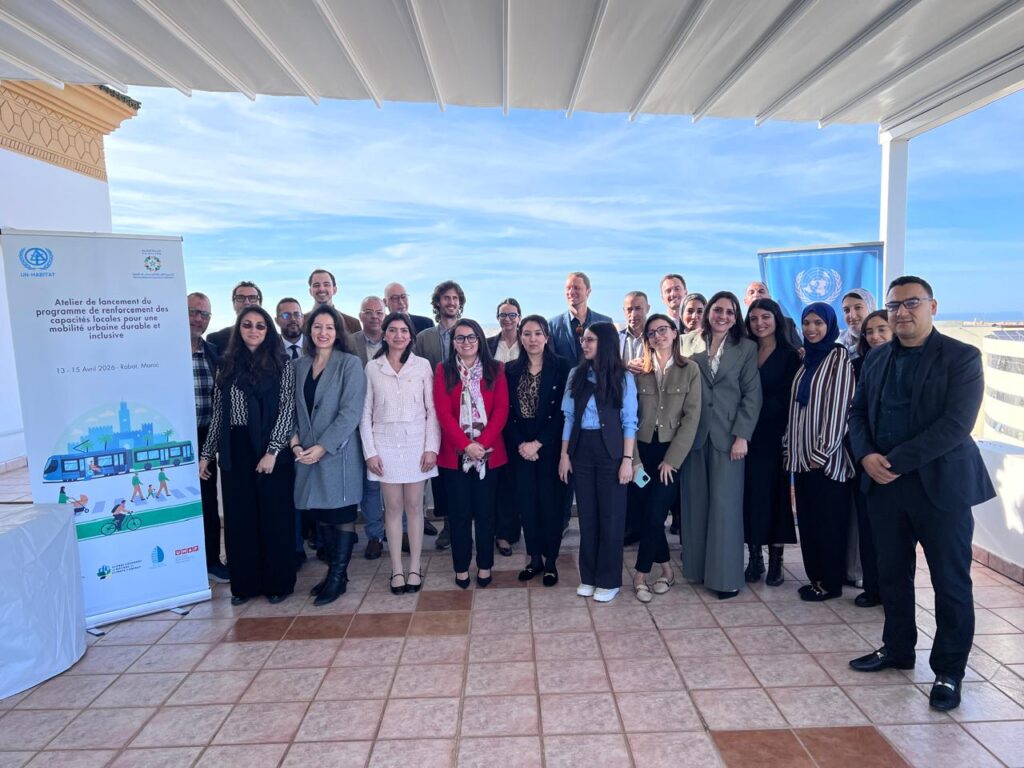
Rabat, Morocco – 13-15 April 2026
Cities, national authorities and international partners convened in Rabat to accelerate the development of finance-ready urban mobility projects, marking a key step toward more coordinated and impactful urban investment in Morocco, a signatory country, for Coalition for High Ambition Multilevel Partnerships (CHAMP) for Climate Action.
Held as part of the Urban Mobility Capacity-Building Programme for Morocco, co-organized by UN-Habitat Morocco, the Directorate General of Local Authorities (DGCT), and Mohammed VI Polytechnic University (UMP6), in partnership with the Global Covenant of Mayors for Climate & Energy (GCoM)–Gap Fund Partnership, the third day focused on bridging city priorities with climate finance opportunities.
A high-level roundtable brought together Moroccan cities, national stakeholders, development finance institutions and technical partners across the project lifecycle, including the City Climate Finance Gap Fund, Agence Française de Développement (AFD), C40 Cities Finance Facility (CFF), Green Climate Fund (GCF), the Foreign, Commonwealth & Development Office (FCDO), and Deutsche Gesellschaft für Internationale Zusammenarbeit (GIZ).
Discussions highlighted key challenges and solutions related to project structuring, investment readiness, and access to climate finance, with a strong emphasis on aligning local project pipelines with national strategies and funders’ priorities.
Through hands-on working sessions led by the GCoM–Gap Fund Partnership and UN-Habitat, cities translated their mobility challenges into concrete project concepts, including:
Integrated and multimodal transport systems
Active mobility infrastructure
Data-driven and smart mobility solutions
Cities also started identifying technical assistance needs and potential financing pathways, advancing their mobility projects toward bankability.
The discussions underscored the critical role of early-stage technical support and strong partnerships in transforming city priorities into implementable investments.
Representatives from Moroccan cities, including Marrakech, Tetouan, Agadir, Tangier, Meknes, Oujda, and Rabat, highlighted a shared commitment to advancing sustainable urban mobility, emphasizing the workshop as an initial step in a broader, long-term process of collaboration.
As a next step, UN-Habitat and DGCT, with support from the GCoM–Gap Fund Partnership, will develop a joint action plan to accompany cities in further project preparation and unlock access to support for urban mobility in Morocco.
This initiative reflects Morocco’s continued leadership in climate and urban development, driven not only by national strategies but increasingly by locally-led solutions. By aligning cities, national authorities and international partners around shared priorities, the program demonstrates how multilevel collaboration can translate climate ambition into concrete, scalable action.
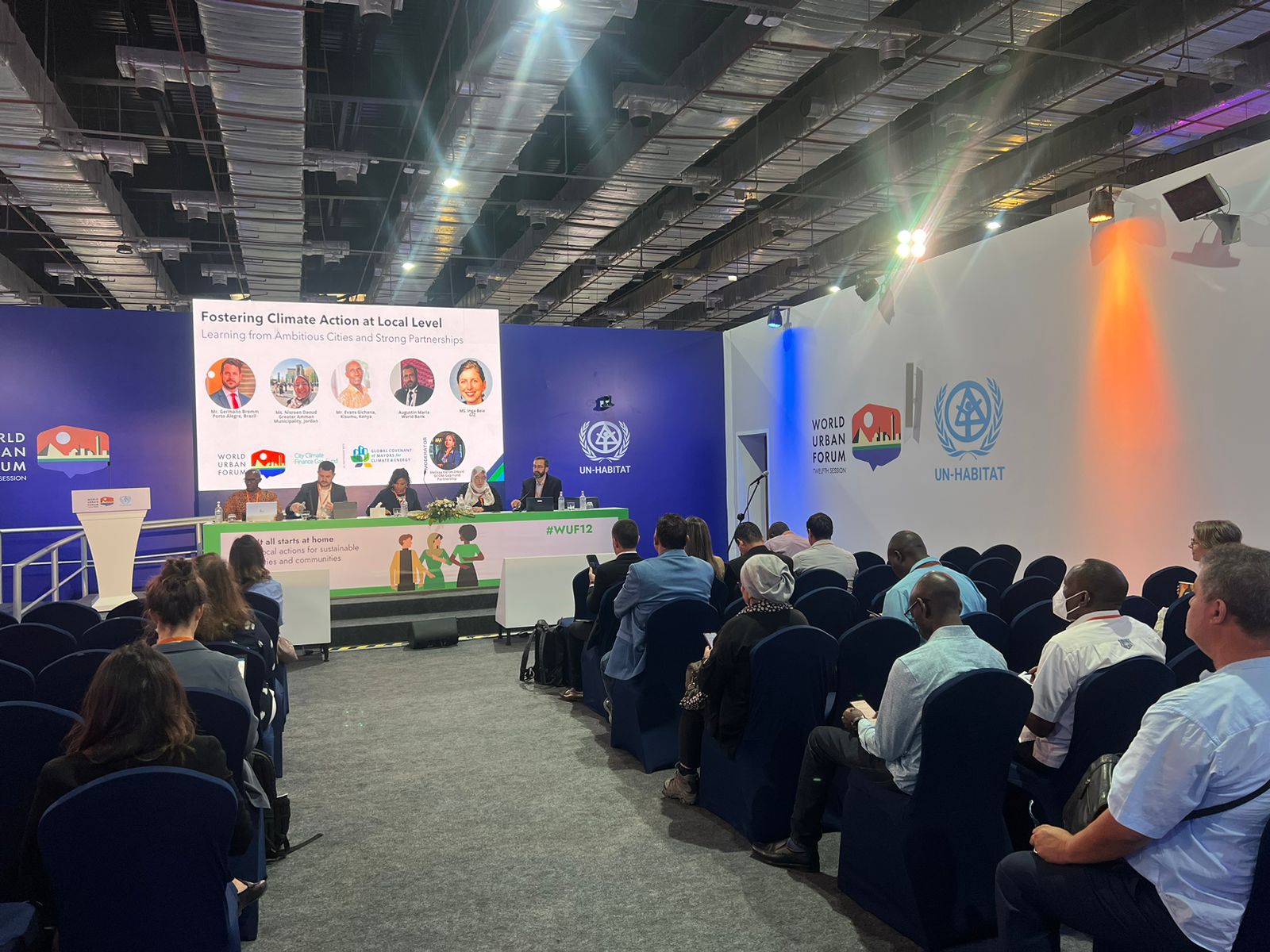
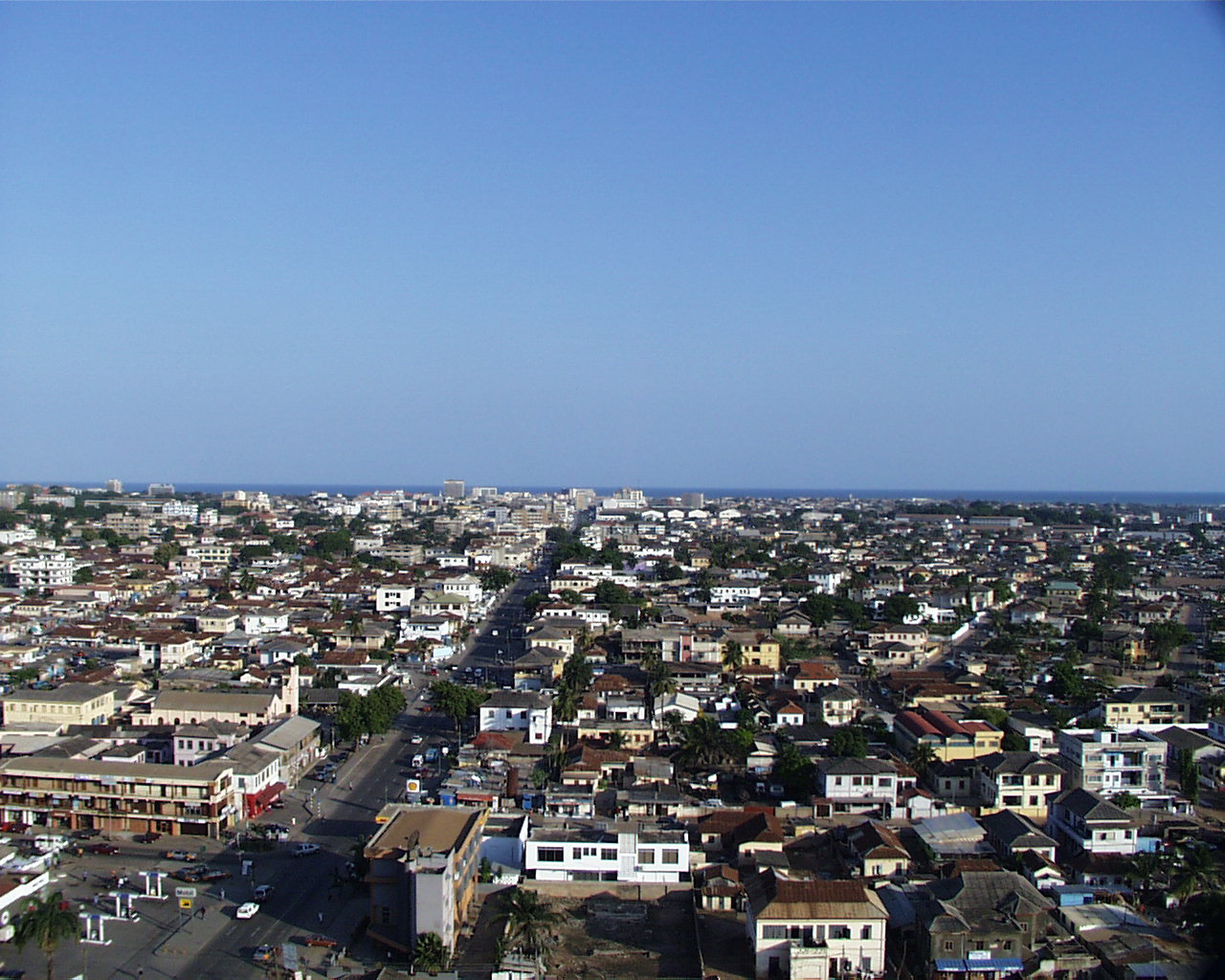
Climate Chance Summit Africa 2019, Accra, Ghana (14-18 October 2019)June 19, 2019
Page Navigation
We care about your privacy
The Global Covenant of Mayors for Climate and Energy uses some
necessary cookies which
are required for our website to function. By
accepting all cookies
you consent to the use of additional cookies to analyze site traffic and online behavior.
You can manage cookies
or withdraw your consent at any time.
This does not affect the lawfulness of the use of these cookies prior to withdrawal.
For more information read our
Cookie Policy.
These cookies are necessary for the website to function and cannot be switched off in our
systems.
They are usually only set in response to actions made by you which amount to a request for
services,
such as setting your privacy preferences, logging in or filling in forms. You can set your
browser
to block or alert you about these cookies, but some parts of the site will not then work. These
cookies do not store any personally identifiable information.
These cookies are necessary for the website to function and cannot be switched off in our
systems. They are usually only set in response to actions made by you which amount to a request
for services, such as setting your privacy preferences, logging in or filling in forms. You can
set your browser to block or alert you about these cookies, but some parts of the site will not
then work. These cookies do not store any personally identifiable information.
These cookies allow us to count visits and traffic sources, so we can measure and improve the
performance of our site. They help us know which pages are the most and least popular and see
how visitors move around the site. All information these cookies collect is aggregated and
therefore
anonymous. If you do not allow these cookies, we will not know when you have visited our site.
Cookie
Provider
Type
Duration
Description
_pk_id
Matomo Analytics
13 months
Used to store a few details about the user such as the
unique visitor ID
_pk_ses
Matomo Analytics
30 minutes
Short lived cookies used to temporarily store data for
the visit
viewed_cookie_policy
www.globalcovenantofmayors.org
persistent
6 months
Used to note whether you have viewed the cookie policy