by Golda Hilario and Jonas Brian Almendrala (Institute for Climate and Sustainable Cities); Marvin Lagonera (GCoM-Gap Fund Partnership)
Over the past decade, Philippine cities and local governments have stepped up their climate ambition, integrating climate and disaster risk assessments into development and land-use plans, and formulating Local Climate Change Action Plans (LCCAPs). Across the country, several cities now have solid pipelines of adaptation and mitigation projects ready to go. Despite this, a gap remains between a good idea and a bankable project. Turning these project pipelines into actual investments requires project preparation resources and financing that many cities still struggle to access.
Since 2023, the Integrated Urban Climate Action for Low-Carbon and Resilient Cities (Urban-Act) project in the Philippines, through the Institute for Climate and Sustainable Cities (ICSC), Clean Air Asia, and GIZ, has worked directly with Antipolo, Bacolod, and Tagbilaran to bridge that gap. Alongside targeted technical guidance from the GCoM-Gap Fund Partnership, these cities refined their project concepts and mapped realistic pathways to funding.
As the Urban-Act project concludes, here are five practical lessons from their journey for cities, national governments, and financing institutions looking to accelerate urban climate action.
The evolving Philippine context: Moving from pipelines to delivery
As of July 2026, the World Bank officially reclassified the Philippines as an upper-middle-income country. While this reflects sustained economic growth, the country remains highly climate-vulnerable and will increasingly need to tap into a broader mix of financing, including loans, blended finance, and private investment, as grant funding tightens. For many cities, this poses a challenge. Finding financial resources is only one piece of the equation; cities also need readiness support as they build the institutional capacity to develop climate action strategies to understand how and when to approach funders.
1. Expand from proposal writing to stress-testing climate project ideas
Under the Urban-Act project, the ICSC worked with Antipolo, Bacolod, and Tagbilaran on renewable energy, urban mobility, and nature-based solutions project ideas. Going beyond concept notes, Urban-Act led cities through joint self-assessments, consultations with identified climate-vulnerable groups and stakeholders, technical reviews, and engagement with domestic finance institutions. After identifying priority projects, the cities were ready to turn these ideas into concrete concepts.
This exercise went beyond learning how to write proposals, presenting cities with the opportunity to stress-test project ideas alongside partners at the GCoM-Gap Fund Partnership. Cities had the opportunity to test their concepts against the real criteria climate finance facilities demand: a strong climate rationale and sustainable development impact, a clear understanding of project preparation, and an assessment of financing pathways, equity, scalability, and solid local governance.
2. Through pitching and matchmaking, cities learned what it takes to move from project idea to investment
Once initial project concept notes were drafted, ICSC brought cities face-to-face with financiers and project preparation facilities at a dedicated Matchmaking Forum. The Forum gave cities a platform to present their project concepts to partners, receive feedback, and better understand where they could improve and what was missing – whether that meant additional studies, improving project designs, clarifying implementation leads, or exploring financing options. One thing became clear from these conversations: having a good project idea is an important start, but cities also need the right support and connections to turn those ideas into actual investments.
For cities, pitching their projects was part of that learning process. Presentations across regional and global events quickly evolved from asking for financing or technical support to articulate how their proposals fit into long-term city plans and what resources the local government could bring to the table.
3. There is no single financing route for every project, but identifying the right one early helps cities prepare more strategically
There is no one-size-fits-all financing route for every project. A loan from the Development Bank of the Philippines (DBP) may suit a project that meets its planning, documentation, and financial requirements for cities that may also be more open to loans, while other cities prefer different financing options. Depending on the nature and readiness of the project, financing options may include grant support, blended finance, energy-service arrangement, or public-private partnership. Identifying the appropriate financing early can help cities prepare project information and meet technical requirements more strategically.
For urgent projects, like solarizing amid the ongoing energy crisis, cities may explore approaches using internal local budgets. This can include a phased approach by focusing on a specific number of government buildings in the first year, and spreading budgeting across multiple years to cover more facilities and structures.
4. Pitching to project preparation facilities and financiers is not a one-time event but a series of engagements, sustained efforts, and coordination
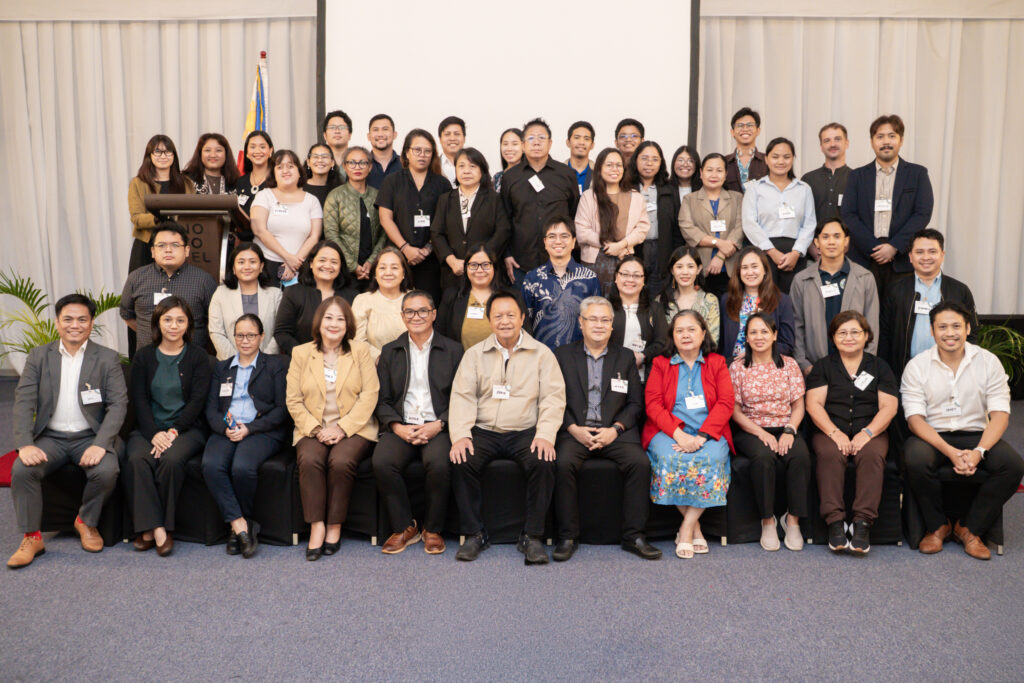
After a pitch, cities still have a lot of work ahead. They may need to conduct additional studies, secure local approvals, set aside funding, or work through environmental and social safeguards and procurement requirements. All of this can take months or even years. That is why, during the Urban-Act closing forum, we wanted cities to leave with a clearer idea of what needed to happen next, who could help, and who would take the lead. The critical next step now is keeping these conversations going even after Urban-Act formally ends.
It is also important to involve financing and project preparation partners early, rather than waiting until a project is ready for funding. During these discussions, the GCoM-Gap Fund Partnership shared what a project preparation facility looks for in potential projects. Having these conversations early helps cities understand expectations and avoid spending time and resources preparing proposals that may not meet financing requirements.
5. Project preparation facilities and development partners can support each other to bring cities closer to the right institutions
Cities can find information about funding opportunities; the hurdle is knowing which one fits a specific project and navigating the process. That’s why making the right connections also matters. While cities can find information about funding opportunities, it is not always easy to navigate and determine which ones fit their projects, who to approach, or what they need to prepare. Project preparation facilities and development partners can support each other by making relevant connections between cities and institutions, such as project preparation facilities whose support aligns with cities’ project needs, and financial institutions whose investment priorities and eligibility criteria match the proposed projects.
This is where greater coordination and matchmaking can help. It is not just about introducing cities to potential partners. It’s about giving them a platform to talk about their projects, ask questions, understand what support might be available, and make sure the conversation leads to actionable follow-ups.
Looking ahead: Scaling project preparation and climate finance support
Through the Urban-Act project and its collaboration with the GCoM-Gap Fund Partnership, we’ve seen firsthand how sustained support can help our partner cities strengthen project concepts and access to technical assistance and climate finance. Antipolo, Bacolod, and Tagbilaran are only three of the Philippines’ 149 cities, 82 provinces, and more than 1,400 municipalities. To reach more cities, we need to move beyond standalone workshops and training sessions. Cities need continued access to technical guidance as their projects develop, beyond the duration of initiatives such as Urban-Act.
One recurring challenge cities raise is the resources required for preparing technical and financial assessments for climate projects. Many cities already have climate plans and promising ideas, but turning them into viable and investment-ready projects requires a clearer understanding of financing mechanisms and domestic financing opportunities available to local governments. Unlocking domestic climate adaptation financing windows like the People’s Survival Fund and the Social Development Goal Fund, while aligning project proposals with their respective criteria, will be critical. Scaling project preparation support, which is estimated at 3-5 percent of total project costs, can bring cities closer to implementation.
Making project preparation support more accessible and scaling it up further can help to move beyond supporting a handful of individual projects to building a larger investment pipeline that benefits more communities across the Philippines.


