Gap Fund
June 20, 2026
From Disclosure to Implementation: Unlocking Capital for City-Led Climate Action
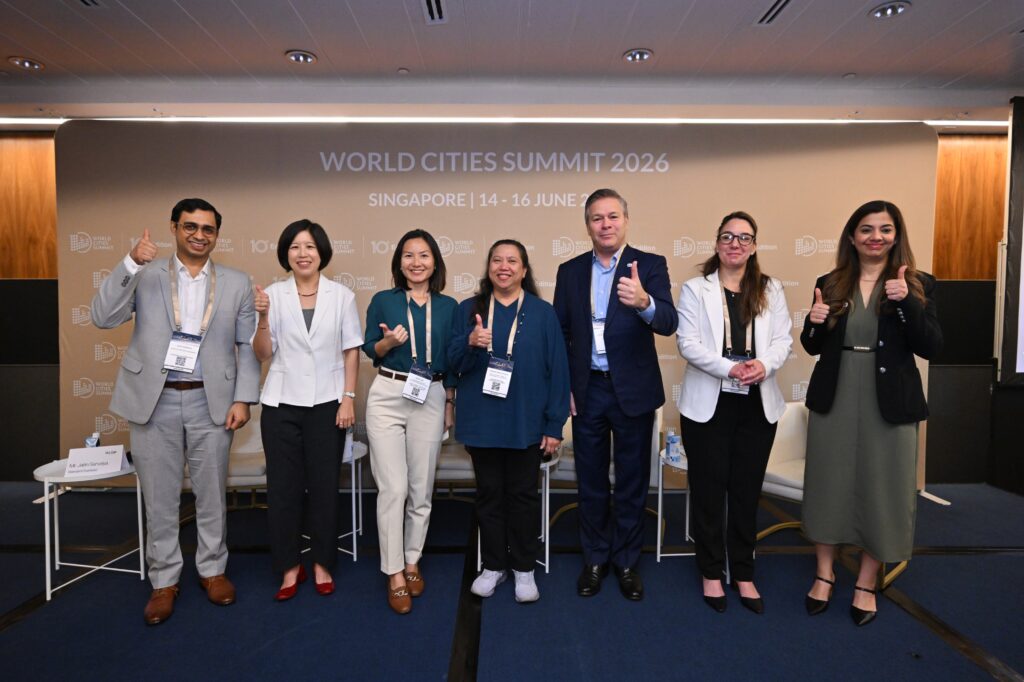
At the opening of the World Cities Summit 2026 on June 15-16 in Singapore, the Singapore Prime Minister Lawrence Wong shared a message that resonated throughout the Summit: cities need to remain practical, people-centered and open to learning. He emphasized that there is no single model for city development. Instead, cities should focus on what works, adapt as circumstances change, and build strong partnerships with communities and stakeholders. He also highlighted that good cities are not built by infrastructure alone, but through collaboration, inclusion and a commitment to improving people’s quality of life.
Data Builds Confidence
Cities are leading climate action, but many promising project ideas still struggle to progress. One major reason is not a lack of ambition or financing, but a lack of meaningful data and information. Against this backdrop, CDP convened a session titled “From Disclosure to Access to Capital: Using City-Level Data to Scale Urban Climate Finance,” bringing together representatives from the World Bank, Standard Chartered, and the GCoM–Gap Fund Partnership to explore how city level data can help turn climate ambitions into investments.
A common message emerged from the discussion: data reporting is just the beginning of the climate ambition. Investors, development banks and technical assistance providers rely on city-level information to understand risks, assess opportunities and determine whether projects are ready to move forward.
From the perspective of the GCoM–Gap Fund Partnership, cities do not need fully developed projects at the outset. However, several early measures are essential, including a clear understanding of the problem to be solved, alignment with local development priorities, strong institutional ownership, political commitment and an appreciation of possible financing pathways. Equally important is the ability to identify information gaps early so that targeted technical assistance can be provided.
Panelists also noted that climate and risk data are often incomplete, baseline information needed to justify investments may be missing, and governance arrangements are sometimes unclear. In many cases, possible financing pathways and revenue models are not being considered during the early project preparation stage. These gaps make it difficult to demonstrate project viability and attract support.
The session concluded with three simple but powerful messages. First, data matters because it strengthens confidence and investment readiness. Second, disclosure is a catalyst that helps cities demonstrate credibility and communicate opportunities. And third, collaboration is essential. When cities, development partners, financial institutions and communities work together, climate projects are far more likely to move from planning to implementation.
Unlocking Capital for City-Led Climate Action
At the IFC’s session on “Financing Green Cities and Buildings: Unlocking Capital for City-Led Climate Action,” it was inspiring to hear perspectives from IFC, Mayor of Zagreb, Mayor of Quezon City, Jakarta, C40 Cities, and GCoM-Gap Fund Partnership on the growing role of cities in driving investments in green infrastructure. One message that resonated with everyone was that mobilizing private capital requires more than ambitious plans. Cities need strong project preparation, supportive policies, and partnerships that can bridge the gap between climate commitments and implementation. Cities don’t need perfect projects to begin—they need the confidence to start, the partnerships to prepare, and the vision to turn local challenges into investable solutions