COP30: How Local Governments Drove Climate Ambition in Belém
COP30 in Belém, Brazil, has concluded after bringing together more than 56,000 delegates for what was the second-largest COP in history. For the first time, the annual climate summit was held in Amazonia, a place at the frontline of climate change. Reflecting on this crucial moment for global climate action, the Global Covenant of Mayors for Climate & Energy (GCoM) proudly joined partners from across the globe to accelerate the shift from climate ambition and negotiation to implementation. Our delegation was present to heed the COP30 Presidency’s call to join the global “Mutirão” and strengthen the subnational climate agenda. City leaders made their presence felt across the highest levels of global climate diplomacy, showcasing the impact of multilevel collaboration and the essential role they play in the “COP of implementation”.
Local Leaders Deliver Joint Outcome Statement to the UN Secretary-General
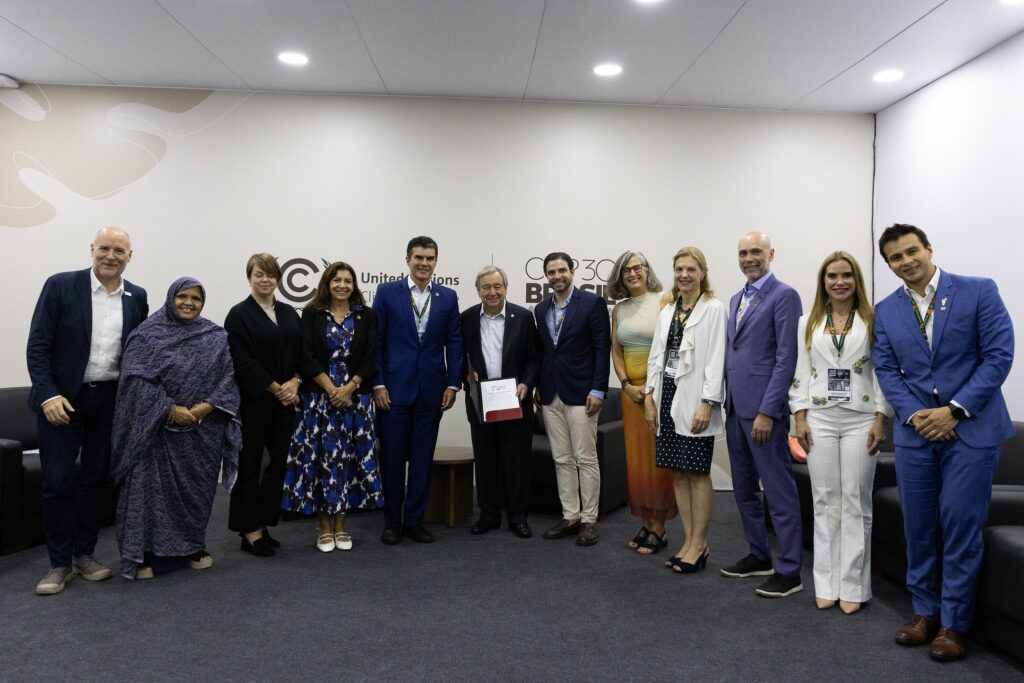
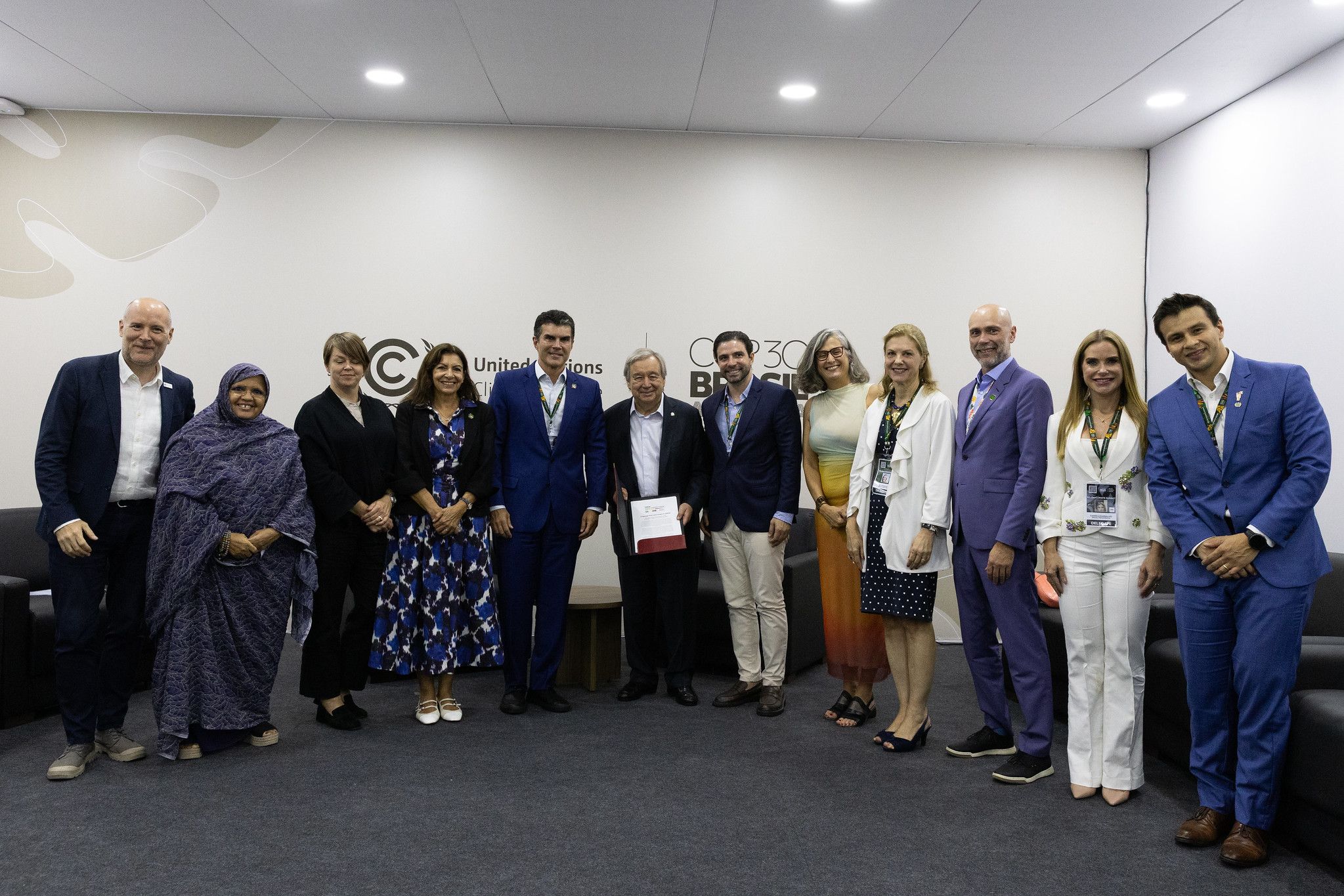
Thousands of mayors and regional leaders issued a united call to strengthen partnerships with cities and regions to close the gap on global climate goals. To kick off subnationals’ position and efforts, during the COP30 World Leaders Summit, a delegation of local leaders – including Anne Hidalgo, Mayor of Paris and GCoM Global Ambassador; Katrin Jammeh, Mayor of Malmö and President of ICLEI; Igor Normando, Mayor of Belém; and Helder Barbalho, Governor of Pará – formally presented the Local Leaders Forum joint outcome statement to UN Secretary-General António Guterres.
Endorsed by more than 14,000 cities, towns, and regions, the statement calls for:
Greater recognition of cities as essential climate actors;
Formal participation of subnational governments in global climate governance;
Scaled-up access to finance for city-level climate projects.
Paris & Belém Agreement: A New Chapter of City Leadership
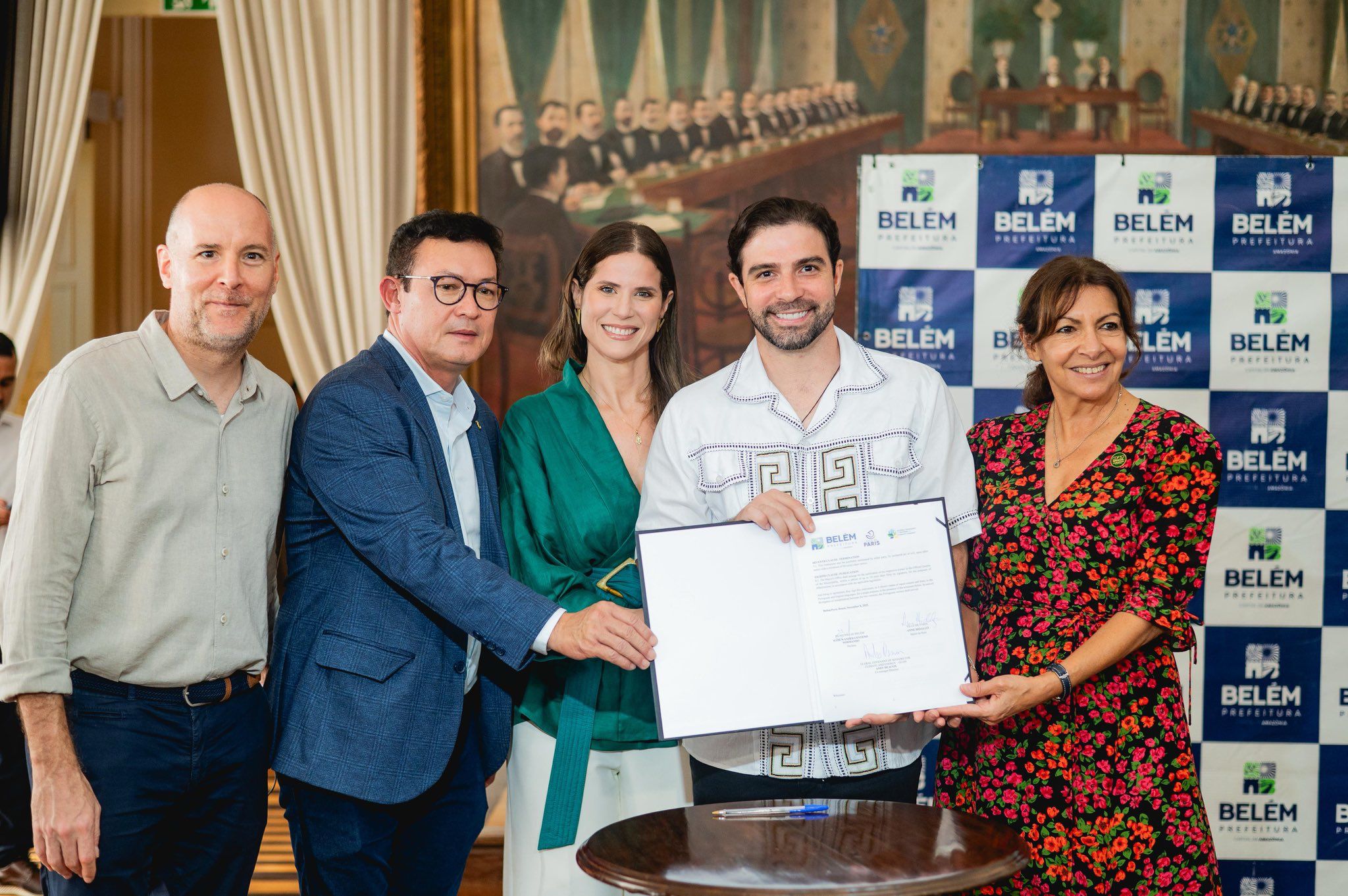
The Municipality of Belém – COP30 hosting city – the City of Paris, and the Global Covenant of Mayors signed the Paris & Belém Agreement, a Memorandum of Understanding establishing bilateral technical cooperation on sustainable urban development, climate action, and innovative governance. The agreement formalizes collaboration across areas such as sustainable mobility, adaptation, circular economy, urban planning, green infrastructure, digital innovation, and Amazonian governance
Signed by Mayor Igor Normando, Mayor Anne Hidalgo, and GCoM Co-Managing Director Andy Deacon, the MOU reinforces cities’ leadership in advancing climate-resilient, inclusive development.
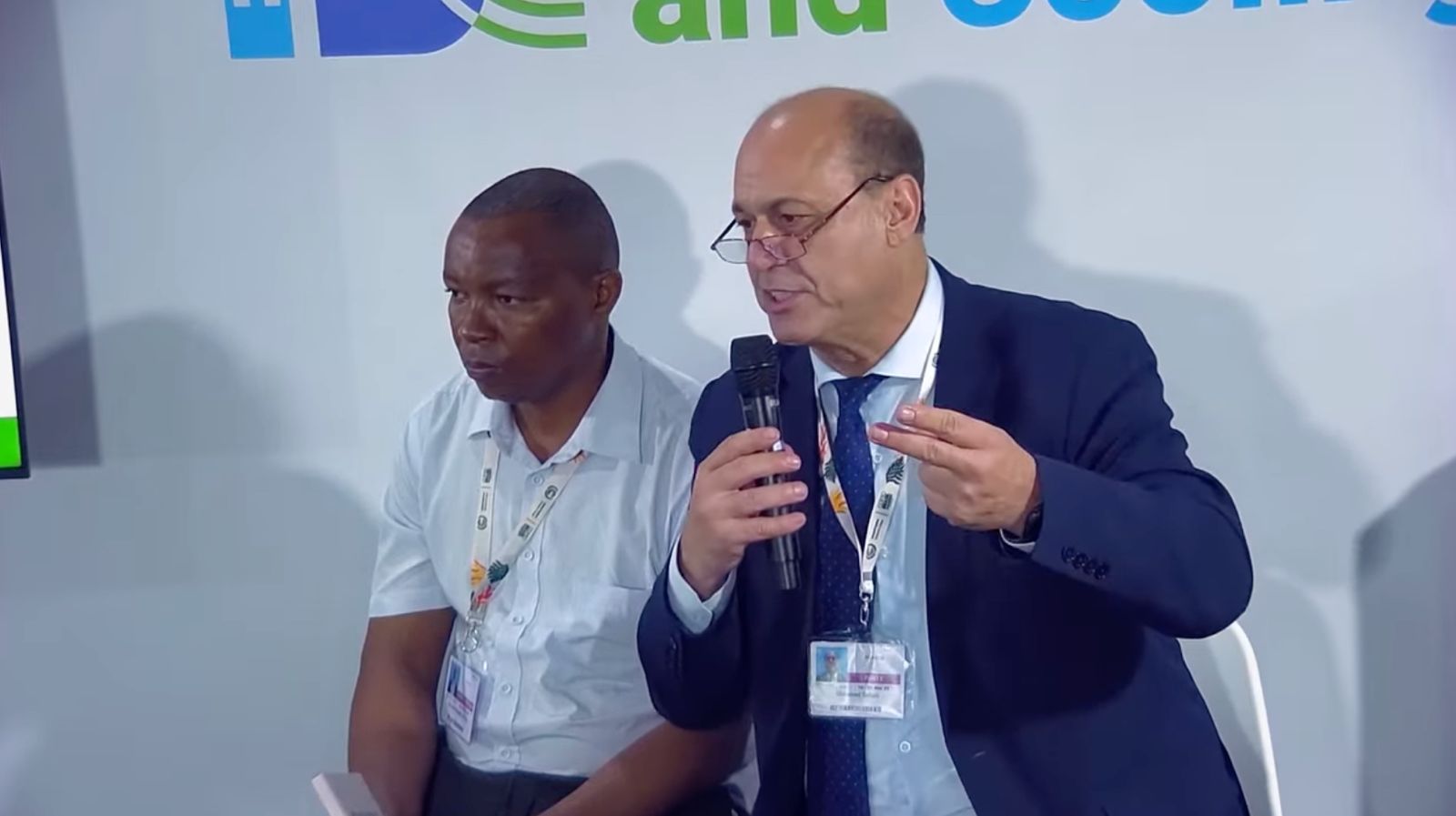
GCoM City Representation Among the subnational delegates, GCoM Regional Ambassador Mayor Mohamed Sefiani of Chefchaouen, Morocco, participated in the meaningful discussions, in the critical second week of the COP. During his intervention at the ‘Unlocking Subnational Finance for Green Sectoral Transformation: Building & Cooling Pathways’ session, he highlighted the pressing need for new sources of finance and new mechanisms to aggregate and bring forward investment opportunities, stressing that “less than 10% of climate finance goes to cities. And when we talk about resilience and mitigation, less than 20% of climate finance goes to resilience. Especially in the Global South, we need financial support to implement our programs and our projects, especially in resilience.” He went on to emphasize that “multilevel action is very very important, and dialogue between national government and local governments. We’re doing it in Morocco, we’re doing it in many other countries in the world but we must generate this process in all countries.”
“COP30 will be the COP of truth” At a time when climate disinformation and misinformation have turned into major challenges for city officials engaged in climate action by undermining trust in institutions and leaders, President of Brazil, Luiz Inácio Lula da Silva, made a strong call during the Opening of the General Plenary of Leaders, stressing that: “COP30 will be the COP of truth. […] In the age of disinformation, obscurantists reject not only scientific evidence but also the progress of multilateralism. They control algorithms, spread hatred, and sow fear. This is the time to impose a new defeat on the denialists.”
COP30 CEO Ana Toni Supports the Yearly Offer of Action Recognizing the pivotal role of cities in cutting emissions, building resilience, and meeting the Paris Agreement goals, Ana Toni, COP30 CEO, praised city leadership during her participation in the “High-Level Ministerial Panel: Multilevel Governance for the Implementation of the Paris Agreement and the Climate Strategy”, highlighting GCoM and C40 Cities mayors’ Yearly Offers of Action.
“We saw at the Local Leaders Forum that cities are taking the lead. They even launched a yearly offer of action commitment to deliver on climate action. It’s not a pledge for ten years from now, but for the next one”, Ana Toni underscored.
LGMA’s United Voice at COP30 The beginning of COP30 saw the announcement of the Local Governments and Municipal Authorities (LGMA) Constituency’s Joint Position, a consensus document endorsed by over 50 local and regional government networks. This display of global solidarity represents the combined voice of tens of thousands of local and regional governments worldwide, spanning national networks across every continent, alongside leading international sustainability and local governance bodies. This unified Position served as the foundation for the Constituency’s high-level advocacy and interventions throughout COP30. The LGMA ensured local perspectives were heard on key thematic areas, including:
Just transition
Climate adaptation
Climate finance
Multilevel governance and urbanization
While not all the LGMA’s goals were achieved, we saw the strongest recognition for multilevel climate action in the UNFCCC agenda to date. You can read more on the LGMA’s interventions here.
Fourth Ministerial Meeting on Urbanization and Climate Change – Brazilian Announcements on Multilevel Governance and CHAMP At the Fourth Ministerial Meeting on Urbanization and Climate Change, Brazil announced two major steps to advance multilevel climate governance:
Brazil and Germany will co-chair CHAMP, the Coalition for High Ambition Multilevel Partnerships;
The Plan to Accelerate Solutions (PAS) was launched at COP30, coordinated by the COP30 Presidency, UN-Habitat, CHAMP, and partners. PAS will align national ambition with local action and integrate subnational priorities into NDCs.
Together, these announcements mark an important new chapter for multilevel collaboration. You can also check the outcome statement of this Ministerial Meeting here.
“CHAMP must now become part of how every country prepares and implements its climate plan – aligning national vision with local execution. National governments commit to big infrastructure projects but local leaders want to see shovels in the ground”, highlighted Simon Stiell, Executive Secretary of the UNFCCC.
GCoM played an integral part of the Ministerial Meeting discussions, with GCoM Co-Managing Director, Andy Deacon, leading the roundtable on “Mutirão for Science and Research in Cities for Actionable Policies”. The exchanges spotlighted how science, research, practice, and local knowledge can be harnessed to accelerate climate action, and how evidence-based policymaking can guide the urban implementation of NDCs 3.0.
Urban NDCs: UNFCCC and UN-Habitat analyses show rising recognition of local leadership A new UNFCCC Synthesis Report on NDCs signals growing momentum for integrating cities and subnational governments into national climate plans. Nearly all new or updated NDCs reference non-Party stakeholders – including cities – as implementation partners, and four out of five NDCs now reference subnational roles.
The report notes that implementing the Paris Agreement will require deep cooperation between national governments and local authorities. Yet ambition still falls short of the 1.5°C trajectory, and stronger recognition and integration of subnational leadership in future COP outcomes remains critical. Read our full review here.
New analysis from UN-Habitat with the support of the University of Southern Denmark and in partnership with GCoM, released at COP30, also shows that cities are now at the heart of national climate plans (NDC 3.0), with the number of plans featuring strong urban content nearly doubling – and a clearer focus on implementation across housing, transport, and finance. Read the full snapshot here.
Beat the Heat Implementation Drive – Mutirão Contra o Calor Extremo To support local governments’ efforts to build heat resilience through inclusive, low-carbon solutions, the COP30 Presidency and the United Nations Environment Programme’s Cool Coalition created the Beat the Heat Implementation Drive (Mutirão Contra o Calor Extremo), a flagship national-to-local collaboration drive aiming to deliver concrete results.
Beat the Heat is mobilizing partners to align resources and translate national commitments into local action by: mapping urban heat risks, expanding green and blue infrastructure, embedding passive cooling into building codes, using public procurement to drive markets toward efficient, low-GWP technologies, and implementing rapid impact solutions that lead to livable professional and personal environments.
The Baku-to-Belém Roadmap: a historic moment for climate finance The Baku-to-Belém Roadmap calls for mobilizing $1.3 trillion USD annually for developing countries by 2035, offering a critical opportunity to ensure cities and regions are at the center of global climate finance.
“The involvement of subnational governments in the $1.3 trillion report is essential to move us toward implementation. Mayors are the bridge between the COP and people’s daily lives – we need this translation to happen”, underscored Ana Toni, CEO of COP30.
Cities currently need up to $4.5 trillion USD per year, yet only 20% of that is being met. The Roadmap highlights:
Strengthening enabling environments;
Increasing direct access for subnationals;
Aligning public and private investment with urban priorities.
The joint GCoM-C40 work over the past three years–supporting project pipelines, finance accelerators, and climate budgeting–shows how cities can deliver when finance and capacity reach them. Read more on this here.
“Energy Efficiency First” The Energy Efficiency First broadcast series, organized by the Global Covenant of Mayors for Climate & Energy (GCoM) and We Don’t Have Time, and streamed live from COP30 in Belém, highlighted the EU’s most impactful energy-efficiency innovations. Featuring senior leaders, such as GCoM Co-Chair and Executive Vice-President of the European Commission for Clean, Just and Competitive Transition, Teresa Ribera, EU Commissioner Dan Jørgensen, Director-General Ditte Juul Jørgensen, and European Investment Bank Vice-President Ambroise Fayolle, alongside mayors, the series brought energy efficiency solutions into the global spotlight. Covering themes from heating and cooling innovation to building retrofits, Energy Efficiency as a Service, and the role of energy communities, the broadcasts demonstrated how EU-backed initiatives are driving energy security, competitiveness, and progress toward global goals to double efficiency and triple renewables by 2030. Discover more here.
Cities Are Rapidly Moving From Climate Pledges to Real-World Implementation An important new assessment unveiled by the Global Covenant of Mayors for Climate & Energy (GCoM) and C40 Cities at COP30 confirms a powerful global trend: cities are translating climate pledges into tangible, rapid implementation that is outpacing national progress. The joint findings demonstrate that local climate action is now a critical force for achieving the Paris Agreement goals and contributing to the first Global Stocktake (GST). The analysis shows a nearly tenfold increase in documented climate actions by cities over the last decade. This evidence strongly supports the Coalition for High Ambition Multilevel Partnerships (CHAMP) and underscores that strengthening collaboration between national and subnational governments is the most effective immediate strategy to close the global implementation gap. Find out more here.
Global Youth Supports CHAMP At COP30, the voice of global youth was clear: It’s time to shift from promise to tangible progress. Young climate leaders are urging all national governments to endorse and implement the Coalition for High-Ambition Multilevel Partnerships (CHAMP). By formally strengthening cooperation between national and local authorities, we can unlock the full potential of cities as key drivers of on-the-ground action. Read the 2025 Global Youth Statement here. Demonstrating the Vital Role of Multilevel Cooperation in Forging Ahead with Climate Implementation Local leaders delivered a powerful message at the COP30 Local Leaders Forum: local action is driving results, and it’s time for formal recognition and integration into the COP process. GCoM Regional Ambassador Mayor Mohamed Sefiani of Chefchaouen, Morocco, alongside other city leaders from Maringá, Bacarena, Benevides, and Governor Helder Barbalho (Pará) presented the COP30 Local Leaders Forum Outcome Statement directly to President Lula and Minister of Cities Jader Filho. They urged the national government to embed structured dialogue between all levels of government to accelerate the delivery of the Paris Agreement.
The Belém Package: Proving that multilateralism can drive climate action 195 nations successfully adopted the Belém Package, signalling a renewed, unified global commitment to tackling the climate crisis. This consensus, comprising 29 key decisions, moves humanity from urgency to concerted action, deepening the collective resolve on crucial areas including just transition, adaptation finance, gender equality, trade, and technology transfer.
“As we leave Belém, this moment must not be remembered as the end of a conference, but as the beginning of a decade of turning the game”, highlighted COP30 President, André Corrêa do Lago. A cornerstone of the approved Belém Package is the strong focus on climate resilience, notably through a commitment to triple adaptation finance by 2035.
Last but not least, the Conference finalized an extensive suite of 59 voluntary and non-prescriptive indicators, designed to track collective progress toward achieving the Global Goal on Adaptation. These carefully selected indicators provide a holistic framework, encompassing critical sectors such as water security, food systems, human health, natural ecosystems, essential infrastructure, and sustainable livelihoods.
The Mutirão Decision The Mutirão Decision, another key outcome of the Conference, reinforces the global commitment to progressively increasing collective ambition. It signals a definitive shift from protracted negotiations toward immediate implementation, coinciding with the full operationalization of the Paris Agreement’s cycles.
To rapidly accelerate this essential transition, the decision establishes two primary mechanisms for practical implementation – both of which can be further enhanced with subnational involvement:
The Global Implementation Accelerator: A voluntary, collaborative platform spearheaded by the COP30 and COP31 Presidencies. Its core function is to provide targeted support to nations as they execute their Nationally Determined Contributions (NDCs) and National Adaptation Plans (NAPs).
The Belém Mission to 1.5: An action-focused initiative managed by the COP29-COP31 troika. This platform is designed to strengthen ambition and international collaboration across the critical pillars of mitigation, adaptation, and investment.
While the COP30 outcomes statement made no mention of fossil fuels, the Governments of Colombia and the Netherlands showed leadership by announcing that they will co-host the First International Conference on the Just Transition Away from Fossil Fuels, backed by the COP30 Presidency. The convening will take place on 28-29 April 2026 in the port city of Santa Marta, Colombia, which plays a significant role in coal exports. Read more here.
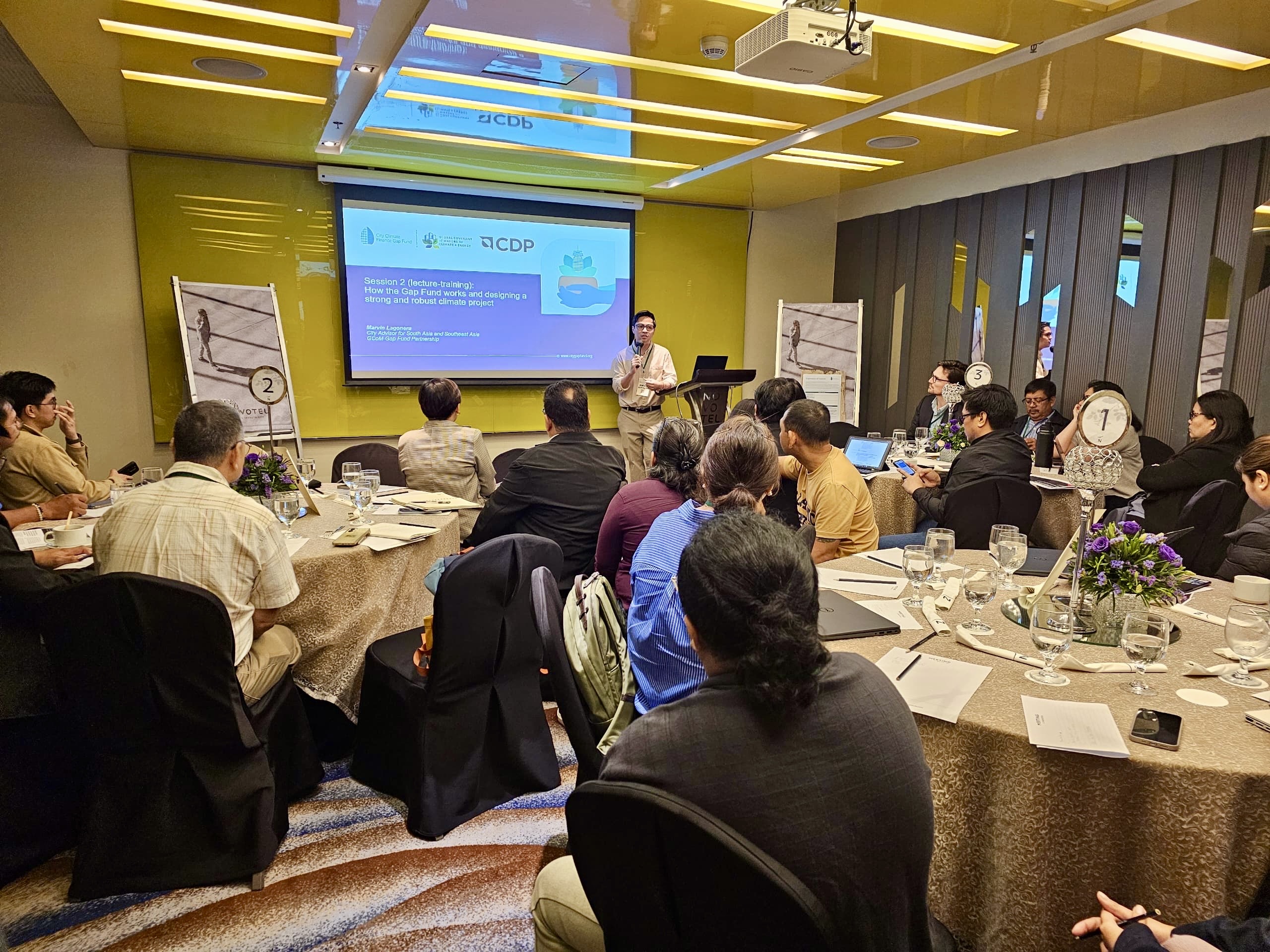
Building Climate Resilience in Philippine Cities Through a Collaborative Approach: The GCoM-Gap Fund Partnership and CDP Co-Host Roundtable DiscussionApril 8, 2025
GCoM-Gap Fund Sessions in Cairo for WUF12October 23, 2024
Page Navigation
We care about your privacy
The Global Covenant of Mayors for Climate and Energy uses some
necessary cookies which
are required for our website to function. By
accepting all cookies
you consent to the use of additional cookies to analyze site traffic and online behavior.
You can manage cookies
or withdraw your consent at any time.
This does not affect the lawfulness of the use of these cookies prior to withdrawal.
For more information read our
Cookie Policy.
These cookies are necessary for the website to function and cannot be switched off in our
systems.
They are usually only set in response to actions made by you which amount to a request for
services,
such as setting your privacy preferences, logging in or filling in forms. You can set your
browser
to block or alert you about these cookies, but some parts of the site will not then work. These
cookies do not store any personally identifiable information.
These cookies are necessary for the website to function and cannot be switched off in our
systems. They are usually only set in response to actions made by you which amount to a request
for services, such as setting your privacy preferences, logging in or filling in forms. You can
set your browser to block or alert you about these cookies, but some parts of the site will not
then work. These cookies do not store any personally identifiable information.
These cookies allow us to count visits and traffic sources, so we can measure and improve the
performance of our site. They help us know which pages are the most and least popular and see
how visitors move around the site. All information these cookies collect is aggregated and
therefore
anonymous. If you do not allow these cookies, we will not know when you have visited our site.
Cookie
Provider
Type
Duration
Description
_pk_id
Matomo Analytics
13 months
Used to store a few details about the user such as the
unique visitor ID
_pk_ses
Matomo Analytics
30 minutes
Short lived cookies used to temporarily store data for
the visit
viewed_cookie_policy
www.globalcovenantofmayors.org
persistent
6 months
Used to note whether you have viewed the cookie policy