Accelerating Nature-Based Solutions for Sustainable Urbanization in Indian Cities
New Delhi, India – The Global Covenant of Mayors for Climate & Energy (GCoM)–City Climate Finance Gap Fund Partnership teamed up with GIZ India and ICLEI South Asia in delivering a training to strengthen the capacity of Indian cities to develop bankable nature-based solutions and climate-resilient infrastructure projects.
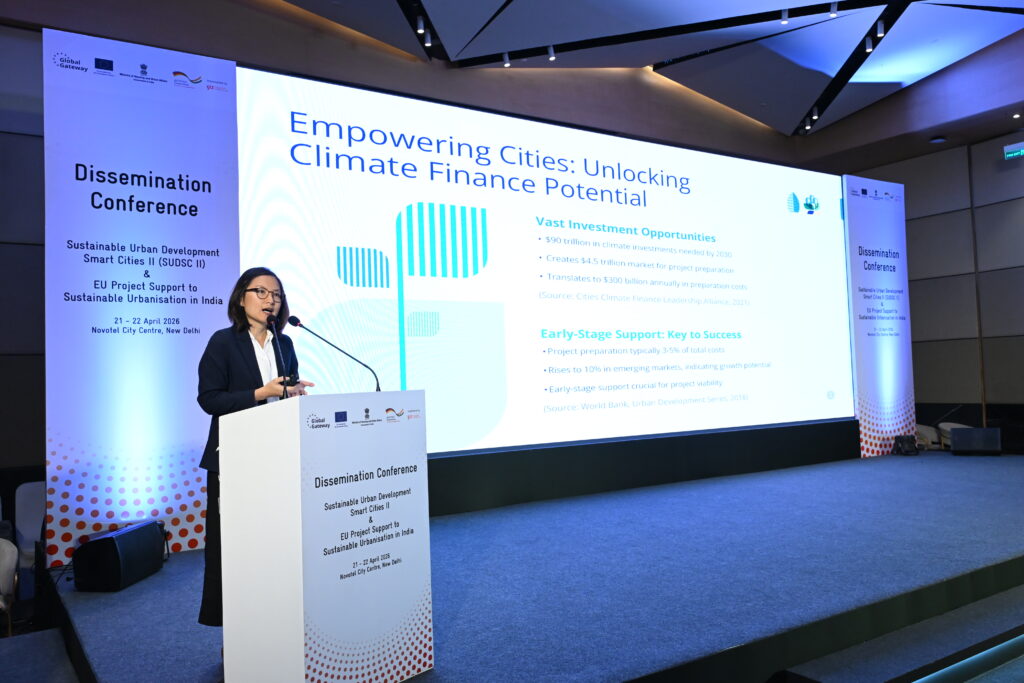
The training was held as part of the two-day Dissemination Conference for the Sustainable Urban Development – Smart Cities II (SUDSC II) and the EU Action on Sustainable Urbanisation, organized by GIZ India from 21–22 April 2026 in New Delhi. The conference aimed to consolidate and share key learnings from these flagship projects, while equipping cities with the tools to translate climate ambition into investment-ready projects.
Knowledge Exchange and Dissemination of Best Practices
The SUDSC and the EU Project Support to Sustainable Urbanisation in India — commissioned by the German Federal Ministry for Economic Cooperation and Development (BMZ) and co-funded by the European Union (EU), in partnership with the Ministry of Housing and Urban Affairs (MoHUA) — have played a pivotal role in supporting policy frameworks, strengthening partnerships, advancing digital innovation, and fostering multilevel knowledge exchange.
Day 1 of the conference focused on current policy discussions and the dissemination of project results, providing a platform for stakeholders to reflect on progress and share lessons learned. Day 2 shifted into a capacity-building format, featuring a dedicated training session, co-organized by ICLEI South Asia, led by international experts on how cities can turn early-stage project ideas into investment-ready proposals.
Building Blocks of a Strong Climate Project Proposal
Jazlyn Lee, Regional Engagement Lead for South Asia and Southeast Asia for the GCoM-Gap Fund Partnership, walked the participants through the foundational components of a bankable climate project, structured around four key pillars:
Project overview: Grasping the project scope, maturity level, and climate rationale
Project preparation: Identifying the scope of preparation support and missing elements
Institutional and financial readiness: Assessing governance and financial aspects
Implementation: Capacity, partnerships, and alignment with national and sectoral priorities
Over the course of the training, city representatives highlighted key barriers to investment-ready projects, including the lack of capital investment planning, project management skills, and strong project preparation.
With a clear understanding of their proposed project ideas, participants were introduced to various tools on governance and stakeholder mapping for different delivery models. Keshav Jha, Senior Manager for Research & Advocacy at ICLEI South Asia, guided the participants through various tools to identify high-priority stakeholders and identify coordination gaps during project preparation. Through the Governance Matrix, participants mapped out decision-making mechanisms, accountability or reporting lines, coordination challenges, improvement actions, and evaluation and monitoring considerations.
Hands-On Exercise on Designing Project Proposals for Nature-Based Solutions
Marvin Lagonera, City Advisor for South Asia and Southeast Asia for the GCoM-Gap Fund Partnership, led the hands-on training designed to enhance the capacity of city leaders in planning and designing project concepts, and preparing Expressions of Interest (EoIs) for the Gap Fund.
Throughout the day, Indian cities identified a range of project priorities centered on nature-based solutions for flood mitigation and sustainable urbanization, translating local climate challenges into concrete proposal concepts and technical assistance needs.
Sustaining Momentum for Project Preparation Support
By bringing together cities, technical experts, and finance partners, the training underscored the importance of partnerships in ensuring that Indian cities have the knowledge and tools needed to move closer from climate ambition to investment-ready projects.
The GCoM-Gap Fund Partnership, in collaboration with GIZ India and ICLEI South Asia, will continue to guide the Indian cities as they enhance their project concepts and potential applications for project preparation support.
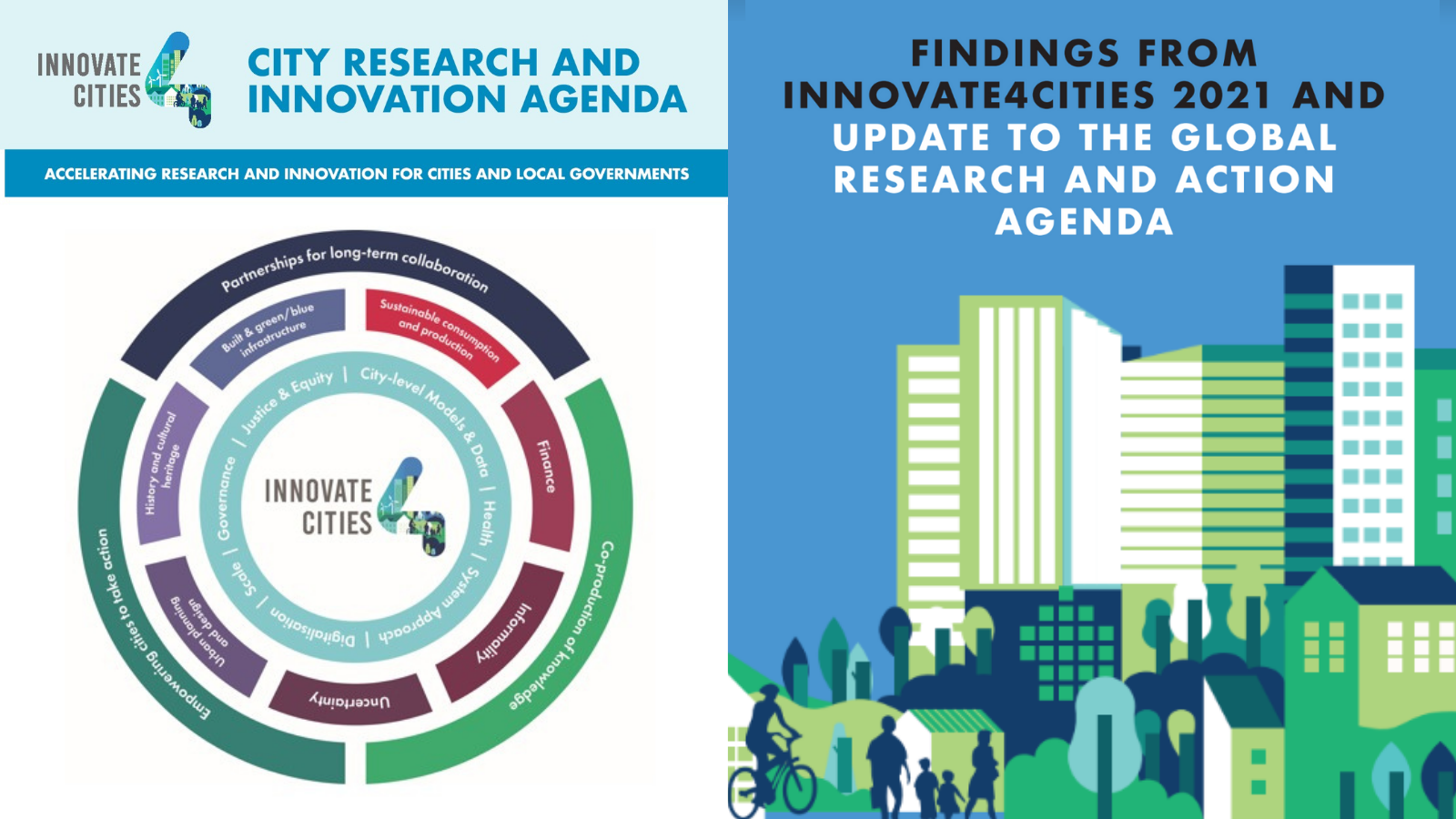
Cities and Climate Change Science Research Agendas launched at the Research Symposium during ICLEI World Congress 2021-2022 in Malmö, SwedenMay 10, 2022
Page Navigation
We care about your privacy
The Global Covenant of Mayors for Climate and Energy uses some
necessary cookies which
are required for our website to function. By
accepting all cookies
you consent to the use of additional cookies to analyze site traffic and online behavior.
You can manage cookies
or withdraw your consent at any time.
This does not affect the lawfulness of the use of these cookies prior to withdrawal.
For more information read our
Cookie Policy.
These cookies are necessary for the website to function and cannot be switched off in our
systems.
They are usually only set in response to actions made by you which amount to a request for
services,
such as setting your privacy preferences, logging in or filling in forms. You can set your
browser
to block or alert you about these cookies, but some parts of the site will not then work. These
cookies do not store any personally identifiable information.
These cookies are necessary for the website to function and cannot be switched off in our
systems. They are usually only set in response to actions made by you which amount to a request
for services, such as setting your privacy preferences, logging in or filling in forms. You can
set your browser to block or alert you about these cookies, but some parts of the site will not
then work. These cookies do not store any personally identifiable information.
These cookies allow us to count visits and traffic sources, so we can measure and improve the
performance of our site. They help us know which pages are the most and least popular and see
how visitors move around the site. All information these cookies collect is aggregated and
therefore
anonymous. If you do not allow these cookies, we will not know when you have visited our site.
Cookie
Provider
Type
Duration
Description
_pk_id
Matomo Analytics
13 months
Used to store a few details about the user such as the
unique visitor ID
_pk_ses
Matomo Analytics
30 minutes
Short lived cookies used to temporarily store data for
the visit
viewed_cookie_policy
www.globalcovenantofmayors.org
persistent
6 months
Used to note whether you have viewed the cookie policy