Gap Fund
February 19, 2026
Municipalities Across the Levant Pave Climate Finance Pathways at Regional Forum in Amman
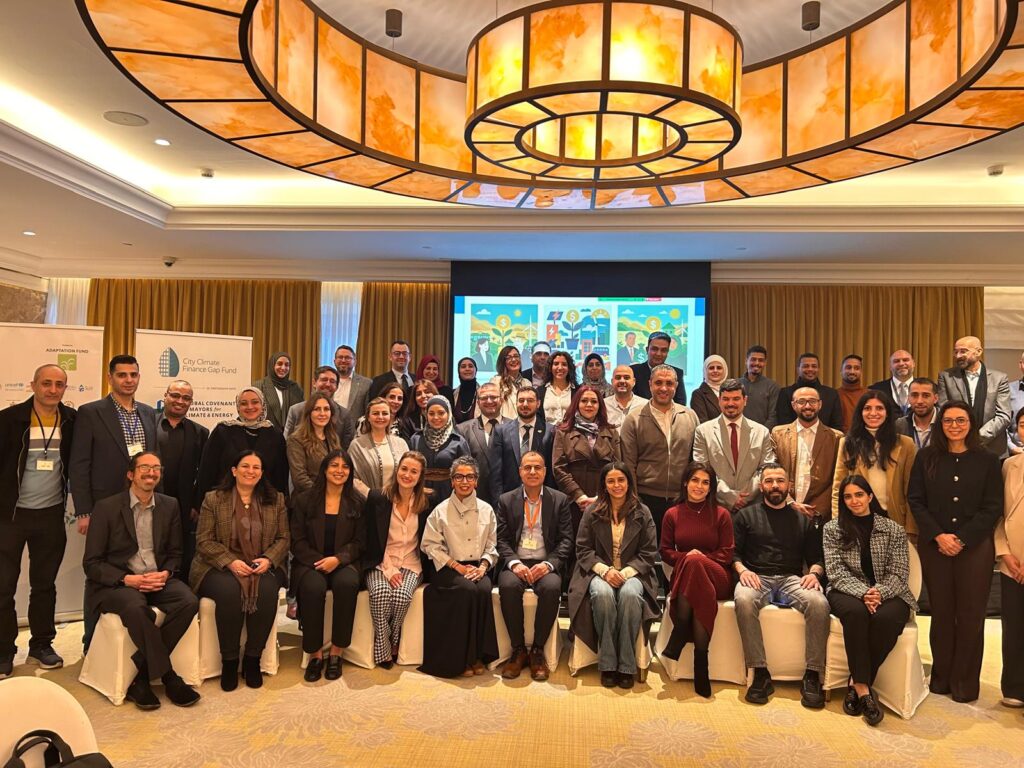
Amman, Jordan, 10–11 February 2026 – Municipal leaders from Jordan, Lebanon, Palestine and the Syrian Arab Republic gathered in Amman for the Climate Finance Pathways Forum, concluding the six-month programme “Empowering Municipalities in Lebanon, Palestine, Syria and Jordan to Access Climate Finance.”
Jointly led by the Global Covenant of Mayors for Climate & Energy (GCoM) – City Climate Finance Gap Fund Partnership (GCoM-Gap Fund Partnership), the United Nations Economic and Social Commission for Western Asia (ESCWA) and UN-Habitat, the programme has supported competitively selected municipalities since September 2025 in transforming locally identified climate priorities into structured, finance-ready project concepts aligned with national strategies.
More than 140 project ideas were submitted through an open regional call. Following national and regional screening, 13 municipal projects were selected to participate in a structured support process that combines regional webinars, technical workshops, and targeted one-to-one mentoring. Over six months, participating municipalities refined objectives, integrated gender and environmental safeguards, assessed risks, strengthened feasibility and clarified implementation and financing pathways. Dedicated sessions on pitching, financing instruments and donor expectations equipped municipal teams with the tools to present bankable proposals.
The Forum represented the final stage of this process. Municipalities pitched their refined projects, spanning water security and flood-risk reduction, nature-based solutions, climate-resilient infrastructure, urban cooling, solid waste management and climate-smart agriculture, and engaged directly with development banks, bilateral and multilateral donors, national ministries, technical experts and project preparation facilities to receive feedback and explore next steps.
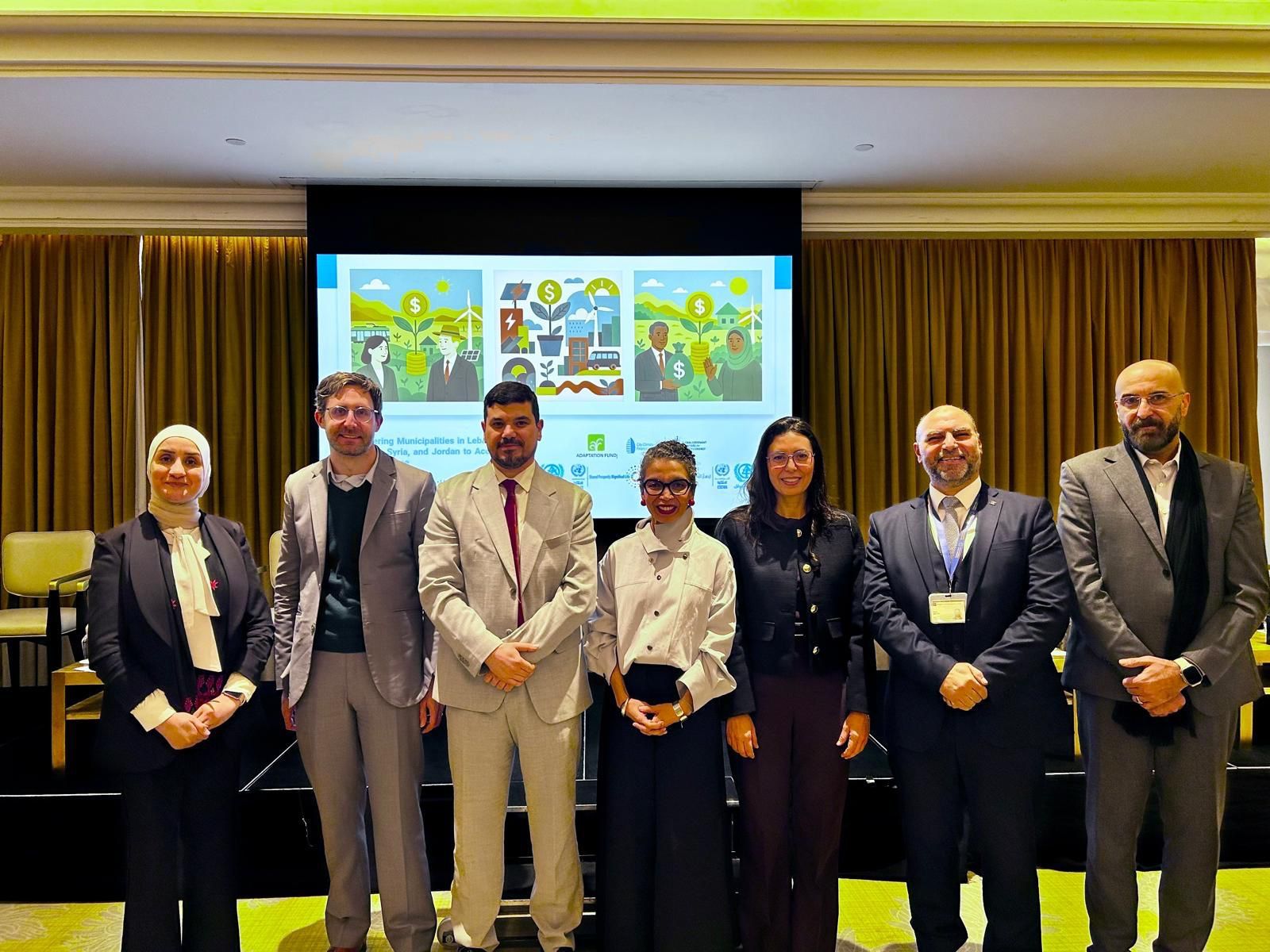
During the panel “Advancing Municipal Projects from Concept to Finance Readiness,” moderated by Sara Hess (ESCWA), speakers from the City Climate Finance Gap Fund (Assil Abuassba), GIZ Jordan (Almomany Salam), IWMI (Sawsan Gharaibeh and Jeremy Stone), GCoM (Johanna Granados Alcala) and Swedfund (Sophie Taintor) reinforced a central message echoed throughout the programme: finance readiness begins at project design. Clear objectives, alignment, scalability, safeguards integration, defined community benefits and risk mitigation were highlighted as essential criteria for investment.
On the second day, a regional roundtable moderated by Johanna Granados Alcala (GCoM–Gap Fund Partnership) brought together representatives from AFD (Cyprien Butin), the EU Delegation to Jordan (Omar Abu Eid), the European Investment Bank (Basma Zouari), the Arab Fund for Economic and Social Development (Mohammed Moujahid), the Cities and Villages Development Bank (Hala Al Huniti), CoWater / Government of Canada (Mohammad Ramadan), and the Islamic Development Bank (Daouda Ben Oumar Ndiaye, online). Discussions clarified available financing instruments in the Levant, including grants, concessional loans, blended finance, guarantees, green sukuk, municipal green bonds and project preparation facilities, and explored how municipalities can align projects with realistic financing pathways.
Across the Forum, municipalities demonstrated strengthened capacity to translate local climate priorities into structured, finance-ready concepts. Participants reported greater confidence in understanding donor requirements, preparing concept notes and aligning projects with national strategies and financing criteria.
Municipal representatives also underscored the value of regional peer exchange, noting that cross-border collaboration contributes to institutional learning, practical knowledge-sharing and stronger project preparation.
As Eng. Balqis Al-Shahwan, CEO of Um Al-Basateen Municipality (Jordan), noted:
“This experience gave us a clearer understanding of how financing institutions evaluate projects and strengthened our ability to design impactful and bankable climate initiatives.”
Hani Jamal El Dine from Aley Municipality (Lebanon) shared:
“We have been to many donor forums before, but this is the first time our way of thinking has changed. We now understand how to design projects that are not only technically sound, but also finance-ready and sustainable.”
Participants emphasized the continued importance of advancing climate adaptation measures alongside reconstruction efforts and essential service delivery, particularly in sectors such as water resilience and infrastructure.
Osama Ahmed Tabash, Director of the Technical Department, Municipality of Abasan Al-Kabira, Palestine, stated:
“Recovery begins with essential services, with water, clean energy, and partnerships that believe in dignity and stability. Through this project, we are laying a scientific and practical foundation for rebuilding a sustainable water system and restoring hope to our community.”
From the Syrian delegation, Abdelruhman Deri noted:
“In this program, we learned how to craft impactful projects with professionalism and clarity. The exchanges with experts and partners were deeply inspiring. We leave with stronger skills, stronger partnerships, and a clear determination to continue developing what we have built.”
The lessons generated through this programme will be consolidated in an upcoming regional publication, ensuring that this knowledge can support more municipalities across the region.